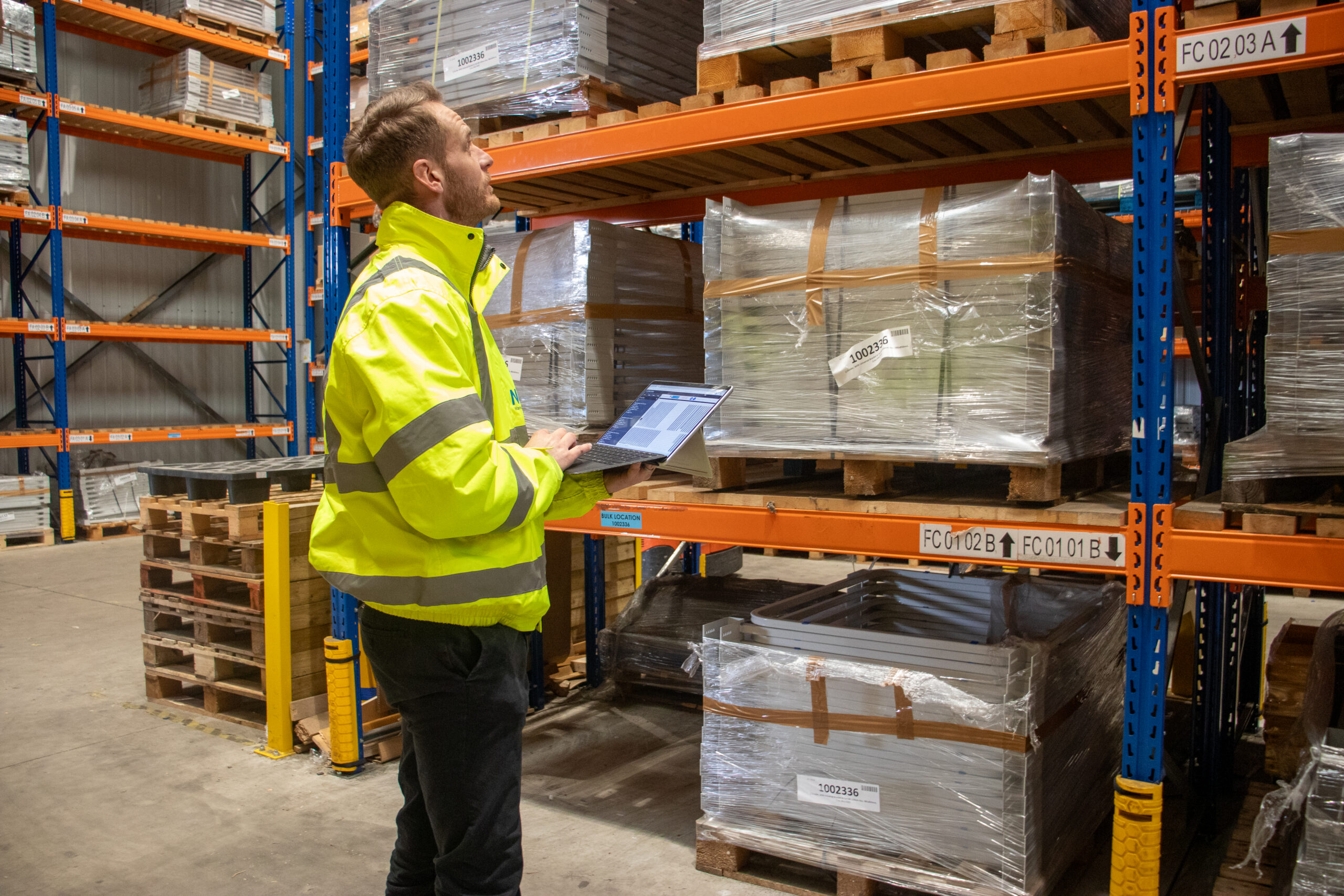
Pallet racking damage is one of the most common safety issues in warehouses, particularly in busy environments where forklifts and pallet trucks are in constant use. Even minor impacts can weaken racking over time, increasing the risk of failure if problems aren’t identified and addressed early.
Understanding how to spot damage and knowing what action to take is essential for maintaining a safe and compliant warehouse.
The key message is simple: warehouse layout is a strategic lever. Reassessing and redesigning how space is used can unlock performance gains within existing facilities and support future change with minimal disruption.
What Causes Pallet Racking Damage?
Pallet racking damage is most often caused by everyday operational activity. Even when damage appears minor, it can compromise the overall stability of the racking system.
Common causes include forklift collisions, overloading bays beyond their rated capacity, and poor pallet placement. But n some cases, damage can also occur due to:
- Incorrect Installation.
- Unseen or Damaged Floors.
- Repeated low-level impacts over time.
- Lack of Proper Signage.
- Missing Rack Protection.
Common Signs of Damaged Warehouse Racking
Spotting damaged warehouse racking early can help prevent accidents and costly downtime. If any of these issues are identified, the affected area should be isolated until it can be properly assessed. Some of the most common warning signs include:
- Bent or Twisted Uprights.
- Beams that appear Dislodged or Sagging.
- Missing or Damaged Beam Safety Locks.
- Cracked Welds or Loose Floor Fixings.
- Visible Corrosion or Fatigue.
Why Damaged Pallet Racking is a Serious Safety Risk
Leaving damaged pallet racking in use significantly increases the risk of collapse, endangering both employees and stock. Structural weaknesses can worsen quickly under load. Addressing damage promptly is always more cost-effective than reacting to a failure.
Beyond safety concerns, damaged racking can also lead to:
- Non-compliance with Health and Safety Regulations.
- Reduced Storage Capacity.
- Disruption to Warehouse operations.
- Increased repair or replacement costs.
What To Do If You Find Damaged Racking?
If damaged racking is identified, immediate action should be taken to reduce the risk of serious accidents occurring. Temporary fixes should be avoided, as they can create further safety issues if the underlying problem isn’t properly resolved.
Best practice includes:
- Unloading the affected bay.
- Preventing further access to the area.
- Recording and reporting the damage using a structured system such as Econform helps ensure issues are tracked, assessed, and resolved quickly.
- Arranging a professional assessment.
When Are Repairs Required?
In many cases, professional repairs are necessary to restore racking systems to a safe and compliant condition. This is particularly important when structural components such as uprights, beams, or base plates have been affected.
If damage has been identified during inspections or daily checks, specialist support can help ensure repairs are carried out correctly and in line with industry standards.
You can find out more about this process on our Racking Repairs page.
Preventing Pallet Racking Damage
While damage can’t always be avoided, many risks can be reduced through proactive planning and good warehouse practices. Preventative measures help protect racking systems, improve safety, and reduce repair costs.
Common preventative actions include:
- Clear signage and load notices to guide safe use.
- Rack protection such as column guards and barriers.
- Dedicated vehicle routes to minimise impact risk.
- Staff training and refresher sessions on safe handling practices.
Taking a preventative approach helps warehouses reduce incidents, maintain compliance, and extend the lifespan of their racking systems.
Keeping Your Warehouse Safe
Regular checks and prompt action are key to managing pallet racking damage effectively. By recognising the signs of damaged warehouse racking and understanding the risks associated with damaged pallet racking, businesses can maintain safer working environments and reduce unnecessary disruption.